
DC Motor vs. Gear Motor: What Is the Difference?
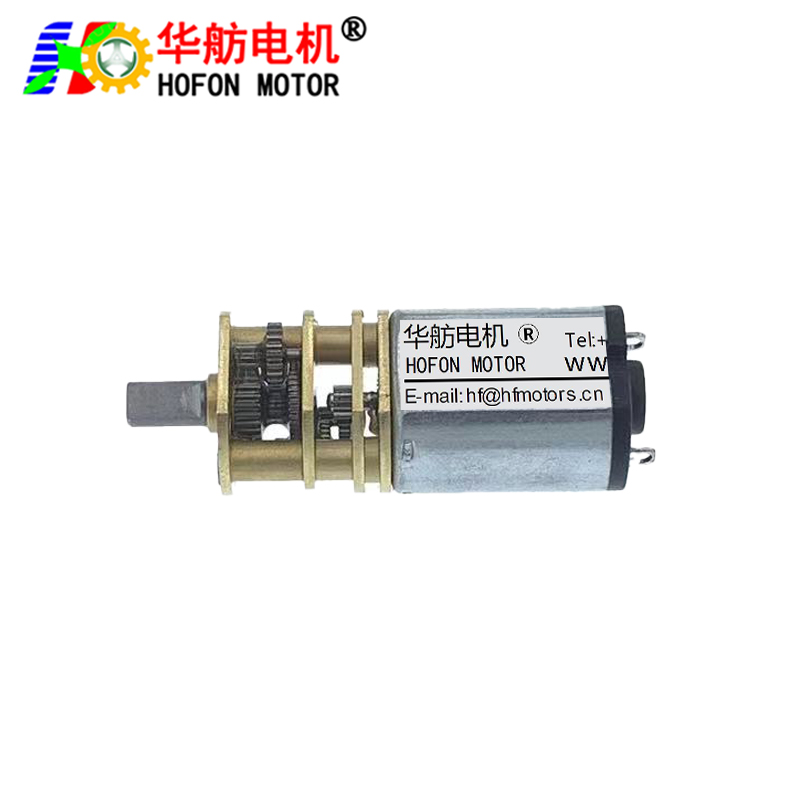
A DC motor and a gear motor are related but different starting points for a motion-system decision. A DC motor refers to the motor that converts electrical energy into rotary motion. A gear motor combines a motor with a gearbox so that the output side is shaped by a transmission stage. The useful comparison is therefore about system output and integration, not about declaring one category better in every case.
This article is a decision framework rather than a model recommendation. A useful component discussion starts with the motion task, the mechanical connection, the available electrical system and the conditions around the equipment. For product-family context, review Hofon Motor’s DC gear motor category; final suitability should always be checked against the actual project brief.
Start with the system question
A direct motor output may be appropriate when the host design handles speed and load through another mechanism. A geared arrangement may be considered when the project needs to reconsider the relationship between motor speed and output motion. The right approach depends on the real load, the required output behavior and the available space.
Early conversations are often more productive when teams distinguish what is already fixed from what remains open. The load path, package envelope, shaft interface, mounting method, duty pattern, available supply and control arrangement all shape the decision. A single label or a single headline number rarely captures the whole system.
Key concepts to separate
Review point | What the project team should clarify | Why it belongs in the discussion |
Motor-only output | How the motor shaft connects to the mechanism and what the downstream system handles. | It establishes the baseline for a direct-drive discussion. |
Gearbox integration | Whether an added transmission stage is part of the required output architecture. | It changes mechanical layout and the relationship between motor and output. |
Output requirement | Required speed, load behavior, duty pattern and direction changes. | It prevents category selection by label alone. |
Compare the output requirement before the component label
A gearbox is not simply an add-on to be chosen after the motor. It is part of the mechanical system. Teams should specify what happens at the output side, then review how the motor, gearing, mounting and controller work together.
Terms such as torque, speed and reduction ratio are often discussed together, but they must be evaluated against a defined duty pattern and mechanical load. A generic comparison cannot determine a correct configuration without those project inputs.
Build a usable technical brief
lDescribe the motion or output task, including starts, stops, direction changes and load variation.
lRecord the mechanical envelope, shaft, mounting and transmission constraints that cannot change.
lState the available supply, control interface and any feedback information required by the host equipment.
lIdentify the duty pattern and the environmental conditions that may affect integration or service access.
lSeparate verified project requirements from assumptions that still need engineering review.
These inputs support a meaningful comparison without turning a general article into an unverified performance promise. Teams can also use them to decide whether they need a category-level conversation, a configuration review or a separate controller and transmission assessment.
Keep selection claims within evidence boundaries
Do not infer a particular output value, efficiency, service life, noise level or suitability from the presence or absence of a gearbox. Those details must be verified against a specific design and product information.
Scope note: This is general technical guidance. It does not establish a specific Hofon Motor model, rating, certification, service life, price, lead time or application result. |
Where to continue the evaluation
Review the gear-motor family when the output transmission is central to the requirement; review a DC micro motor family when the project is still defining the motor-side architecture. See the related DC micro motor category category for further product-family context. When the project inputs are ready, contact Hofon Motor with the application requirements for a focused category discussion.