
What Is a Brushless DC Motor? A Practical B2B Overview
If you are asking what is a brushless motor, the shortest answer is that it is an electric motor that uses electronic commutation rather than mechanical brushes. In common brushless DC motor discussions, the controller coordinates current in the stator windings so that the rotor continues to turn.
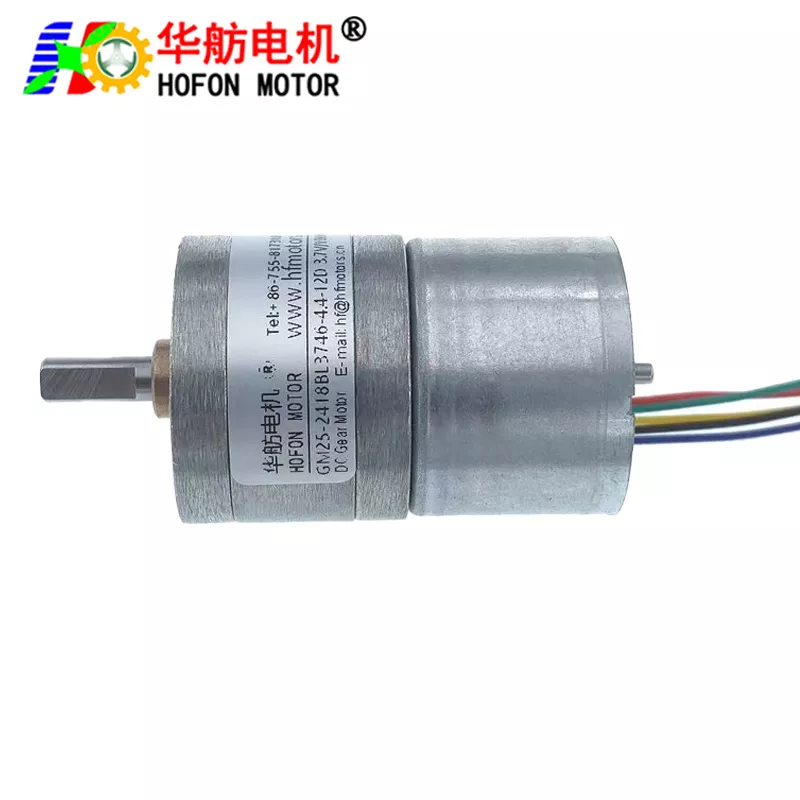
That definition is useful, but B2B selection requires a little more context. A motor is part of a drive system. The controller, available power, feedback method, mechanical load and installation conditions all affect how the system should be specified. Hofon Motor presents a brushless motor category as one of its public product categories.
The basic parts of a brushless DC drive
A simplified BLDC system includes a rotor, a stator, electronics for commutation and a power source. The rotor contains magnetic elements, while the stator contains windings. The controller changes the energized winding pattern in sequence. This creates a rotating magnetic field that interacts with the rotor.
The precise arrangement varies by motor design and system architecture. The important point for a non-specialist buyer is that the electronic controller is not an optional detail in the same way it may be in a basic brushed-motor discussion. It is part of the overall operating concept.
How electronic commutation works
The controller needs an indication of rotor position or a method of estimating it. In a sensored arrangement, position feedback can be supplied by a sensing method integrated with the system. In a sensorless arrangement, the controller uses electrical behavior to estimate position. The appropriate approach depends on the required starting, speed and load behavior.
System element | General role |
Rotor | Rotating element that interacts with the stator’s magnetic field. |
Stator windings | Stationary windings energized in sequence by the control system. |
Controller | Coordinates electronic commutation according to the selected control method. |
Mechanical load | Defines the motion task that the drive system must complete. |
Why the full system matters
It is tempting to treat “brushless” as a complete purchasing specification. It is not. A project brief should explain the expected speed range, load behavior, duty cycle, available supply, mounting arrangement, environmental conditions and required control interface. These details help a supplier determine what category and configuration discussion is appropriate.
They also prevent misunderstandings. For example, a controller choice may affect wiring, enclosure requirements and how the equipment is commissioned. A general explanation of the working principle should not be used as evidence for a particular model’s rating, efficiency, service life or suitability.
Questions for an early technical brief
lWhat is the required motion and load behavior?
lWhat speed range and duty pattern are expected?
lWhat space, shaft and mounting constraints apply?
lWhat control signal or feedback information is available?
lWhich operating conditions could affect integration?
Conclusion
A brushless DC motor is defined by electronic commutation, but component selection still depends on the complete drive system. Begin with the motion task and integration constraints, then use the Hofon Motor product overview as category context. When the requirement is ready, contact Hofon Motor with the project inputs for a focused discussion.