
Coreless vs. Iron-Core DC Motors: Design Trade-Offs to Review
The query coreless DC motor torque density compared to iron core is best treated as an engineering comparison, not as a shortcut to a performance conclusion. Coreless and iron-core DC motors use different armature constructions. The right choice depends on the complete motion requirement, including load behavior, response needs, mechanical envelope, control method and the limits of the surrounding equipment.
A coreless motor uses a winding arrangement that does not rely on a conventional iron core in the armature. An iron-core motor uses an armature construction built around an iron core. These structural differences can influence system behavior, but they do not establish a universal ranking for torque, speed, cost or suitability. Hofon Motor publicly lists a coreless motor category; individual designs must be discussed against a verified requirement.
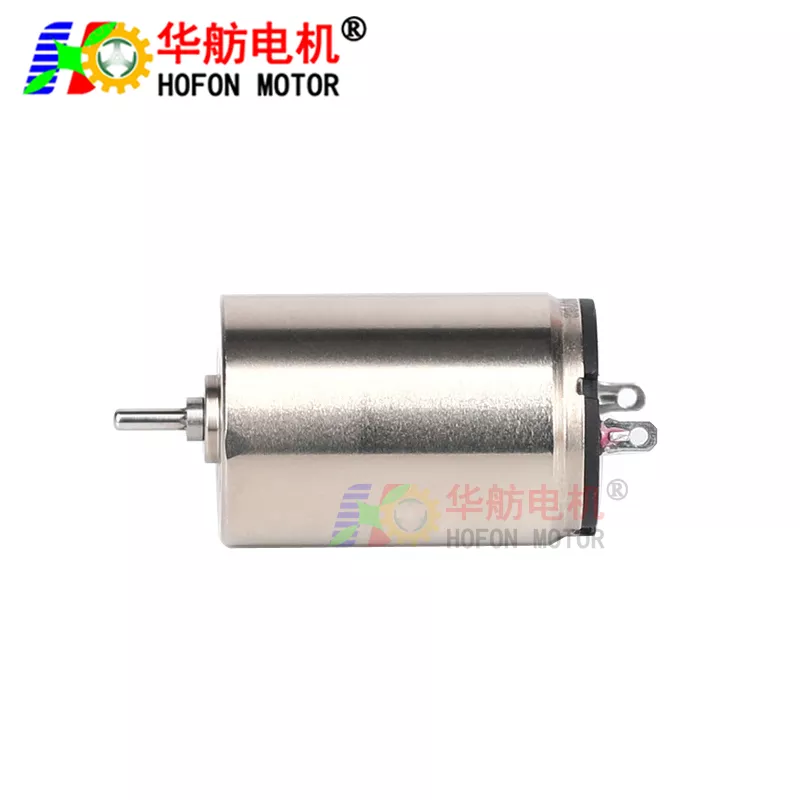
Compare construction before comparing claims
Construction affects the moving parts and magnetic circuit of the motor. That makes construction a useful first lens for a design review. It should not be used to make unqualified claims about exact torque density, acceleration, efficiency, heat behavior or operating life.
Review point | Coreless construction discussion | Iron-core construction discussion |
Armature concept | Uses a winding arrangement without a conventional iron armature core. | Uses an armature construction incorporating an iron core. |
System question | Review with the required response, package and control arrangement. | Review with the required response, package and control arrangement. |
Selection boundary | Do not infer a specific performance result without verified application data. | Do not infer a specific performance result without verified application data. |
Translate “torque density” into project inputs
In an early design meeting, “torque density” often signals a space-constrained requirement. The team should clarify what needs to fit inside the equipment, what output motion is required and what transmission or gearing may be present. It should also distinguish continuous behavior from short-duration operating events rather than assuming one number represents the whole duty cycle.
Useful inputs include the mechanical load path, speed range, start-stop pattern, permitted mounting envelope, available control system and environmental conditions. These inputs make a component conversation more productive than a generic request for the highest-density design.
Use a neutral trade-off checklist
lWhat motion must the mechanism perform, and how does the load change?
lWhich dimensions, shaft arrangement and mounting interfaces are fixed?
lWhat speed range and duty pattern are expected?
lWill the system use a direct drive, gearing or another transmission approach?
lWhat evidence is required before making application-specific performance decisions?
Keep product facts within verified boundaries
This article explains construction-level considerations only. It does not claim that a particular Hofon Motor model delivers a particular torque value, power level, efficiency level, certification, service life or application result. Such information should be verified in the relevant product documentation and project discussion.
Conclusion
Coreless and iron-core DC motor constructions provide different starting points for system design. A responsible comparison turns a broad torque-density question into clear mechanical, electrical and control inputs. Review the Hofon Motor product overview, then send the intended motion and installation details to Hofon Motor to discuss the relevant motor category.