
What Is a Brushless Motor? A B2B Buyer's Introduction
What is a brushless motor is often searched when an industrial team needs a clear starting point before comparing motion components. A brushless motor is an electric motor that replaces mechanical brush commutation with an electronically managed switching sequence. For a buyer, designer, or integrator, the useful next step is not a quick label match but a structured look at the load, control scheme, mechanics, and documentation. This guide uses a third-party engineering perspective to separate general operating principles from product-specific claims and to identify the questions that should be resolved before a technical selection conversation.
Brushless motor definition
A brushless motor is an electric motor that replaces mechanical brush commutation with an electronically managed switching sequence. In practical industrial work, the definition establishes the vocabulary but does not settle the design. The same component family can be considered under very different speed, torque, positioning, installation, duty-cycle, and control requirements. A sound evaluation begins by stating what must move, how it must move, what the load does over time, and how success will be measured at the machine output rather than at an isolated component.
For product-family navigation, review Brushless Motor category and Brushless Motor selection context.
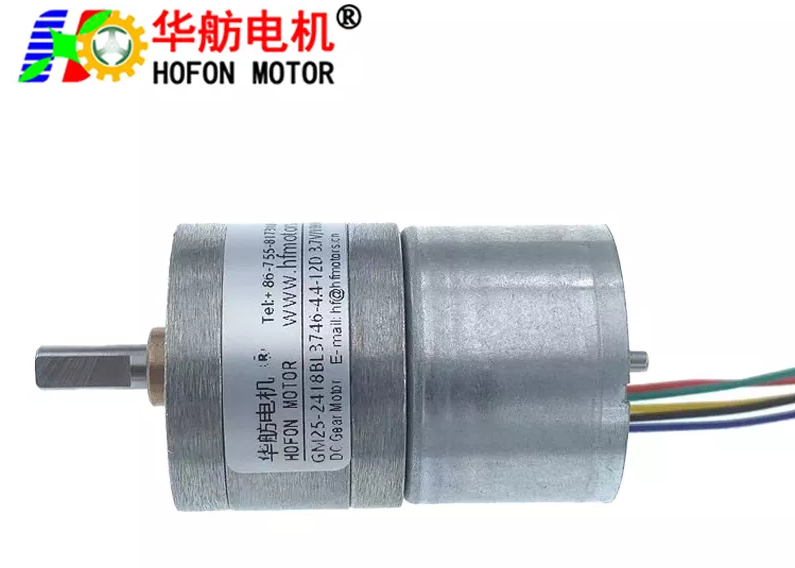
How electronic commutation changes the system
The stator carries the energized windings while the rotor carries a magnetic field. A controller must know, estimate, or infer rotor position so that it can energize the appropriate phase at the appropriate moment. The important buying point is that the motor, feedback method when used, and controller form one motion system rather than three independent purchase decisions. The practical lesson is that an electrical machine should be reviewed with its mechanical load and control chain in view. Input power, current management, rotational speed, transmission elements, sensing, and mechanical resistance are connected variables. Changing one can alter the assumptions behind the others, which is why a concise system map is often more useful than a long list of isolated specifications.
A useful review separates continuous operating conditions from short-duration events. Start-up, acceleration, reversal, holding, emergency stops, temperature change, and external disturbance can impose different demands from steady running. The evaluation should also identify what is measured directly, what is estimated, and what remains an assumption until it is tested in the intended machine. This approach helps teams communicate technical risk without making unsupported promises about results.
Selection inputs for industrial buyers
Review the required speed range, load profile, supply voltage, space claim, control architecture, and environmental boundary before comparing catalog entries. The request for quotation or internal design brief should describe the output requirement first and work backward through the transmission and motor. It should distinguish nominal conditions from limits, state the preferred measurement units, and identify the documentation needed for review. Where requirements are uncertain, the responsible engineering team can record the assumption, the owner, and the verification method rather than hiding uncertainty in a generic specification.
The following parameter groups help structure an early technical discussion. They are not a substitute for actual product data, drawings, electrical documentation, or validation on the intended assembly.
Parameter group | Question for the selection discussion |
Motion requirement | What output speed, position behavior, torque, acceleration, and operating cycle are required? |
Mechanical interface | What mounting, shaft, transmission, load support, and space constraints apply? |
Electrical and control | What supply, driver, feedback, command interface, wiring, and protection conditions are required? |
Validation boundary | What documents, measurements, samples, and acceptance criteria will confirm the final fit? |
Electronic commutation can change integration requirements, but it does not by itself establish a specific outcome for a particular product or application. The most reliable content and sourcing process makes this boundary explicit: general engineering knowledge provides a framework, while final suitability depends on verified product documentation and the actual system. This protects the project from treating a category name, a simplified calculation, or a generic operating principle as evidence for a specific configuration.
Related product information can be used as a starting point in Brushless Motor product-category review.
Before release, the team can turn the discussion into a short decision record. Include the required motion result, the load assumptions, the preferred architecture, the questions still open, and the test that will close each question. This record makes later changes easier to assess and gives purchasing, controls, mechanical, and quality stakeholders a common reference. It also keeps the final decision focused on engineering fit rather than marketing language.
A disciplined review also separates facts from requested confirmation. Documented dimensions, interfaces, and electrical ratings can be compared directly when they are available. Expected behavior in the target machine should be treated as a validation item because fixtures, cabling, mounting, control settings, and the real load can change the result. That distinction supports clearer decisions, more useful supplier communication, and a traceable path from an early concept to an approved configuration.
FAQ
What information should be prepared before a technical discussion?
Prepare the motion objective, load profile, speed range, duty cycle, supply details, mechanical envelope, mounting interface, environmental conditions, and acceptance criteria. Clear inputs make comparison more meaningful and keep assumptions visible.
Can a category page replace product-level verification?
No. A category page is useful for navigation and an initial selection discussion, but a specific design still requires review of the relevant product documentation and the complete machine requirement.
Why is system context important?
Motor behavior is affected by the controller, load, transmission, power source, mechanics, and operating cycle. Evaluating these elements together reduces the chance of treating a component label as a complete engineering answer.
If you are reviewing a motion requirement, Hofon can be contacted for a product-category and engineering-fit discussion based on your documented inputs. Contact Hofon to share the application boundary and request the appropriate next conversation.
Works Cited
All About Circuits. Understanding DC Motor Operation Modes and Speed Regulation Techniques. All About Circuits, https://www.allaboutcircuits.com/news/a-basic-guide-to-dc-motors-types-of-motors-operation-modes-and-their-applications/. Accessed 5 Nov. 2026.
U.S. Department of Energy. Improving Motor and Drive System Performance: A Sourcebook for Industry. 2014, https://www.energy.gov/sites/prod/files/2014/04/f15/amo_motors_sourcebook_web.pdf. Accessed 5 Nov. 2026.